Departing the Writing Life – 16 January 2026
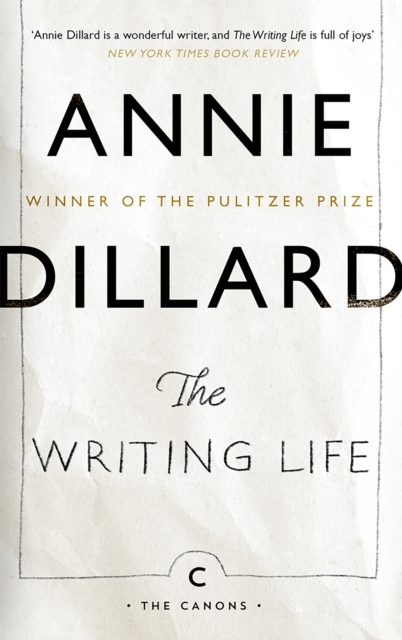
Writers, shy, aspiring, self-proclaimed or oft-published, should, I think, all read The Writing Life by Annie Dillard. Her account and analysis of writing, much of which includes recognising what must be discarded (usually the parts one considered best), is highly intelligent. It is a pleasure to learn from her: she brooks no nonsense – if you want to write you need to love sentences and you need to get on with writing them – while acknowledging the absurdity of choosing to lock yourself in a room, block the window and try to solve a problem of your own creation. In Dillard’s case, aided by cigarettes, coffee and chocolate, a diet with no small effect on heart or writing rate.
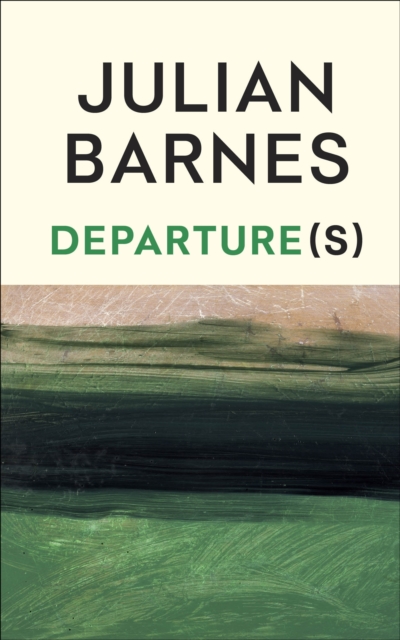
For readers too, The Writing Life, is significant, talismanic. ‘Why are we reading, if not in hope of beauty laid bare, life heightened and its deepest mystery probed?’ Dillard asks. ‘Why are we reading if not in hope that the writer will magnify and dramatize our days, will illuminate and inspire us with wisdom, courage, and the possibility of meaningfulness…?’ Add to those hopes that of love, and this is what I found in Departure(s) by Julian Barnes.
Departure(s) will be his last book, Barnes declares. ‘Definitely,’ he writes, perhaps inviting you to question the claim though he gives ample reason for it. The book is neither novel nor autobiography nor essay on Proust, madeleines and memory. (It may be all of those but this hardly matters – please remove it and any accompanying patisserie from their boxes.)
There is a love story, that of Stephen and Jean, a couple who get two beginnings, two endings and no middle. Barnes introduced them to each other at university and again many years later. He swore an oath that he would never write about them. And yet—.
There is an examination of memory, identity and who we are when memory fails, as if it can ever be trusted.
There is a dog. Jimmy. He does not know that he is a dog. But… is it possible that he has his own experience of and later memory of madeleines (if not of Proust)?
There is an arrival even as Barnes takes his leave – Julian Barnes the author and you the reader come to sit side by side outside a café. You watch the passersby, attentive and attending. You mutter questions and observations. ‘Don’t stop looking,’ he urges, even as he bids farewell and thanks you for your time together. No, don’t stop looking.
I would gladly shoulder whatever punishment he faces in the underworld for breaking his oath. I am in love with his search for the whole story, the only story.
I cannot do it justice. I have read Departure(s) twice in four days. There is so much still to see.
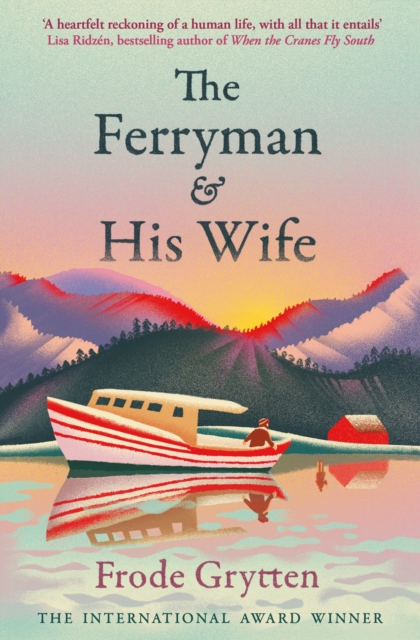
Departing too is the fictional Nils Vik, the ferryman of Frode Grytten’s novel The Ferryman & His Wife. Every day he has taken passengers across the fjords, observed kindness, cruelty, the quotidian and the extraordinary, sailed a man towards love and delivered newspapers and a baby. Today is his last. He will make his rounds, meeting those who died before him and we will find out who he is for each of them, including for Luna, a dog who knows she is a dog.
If Departure(s) or The Ferryman & His Wife sound sentimental, this is the fault of my writing and not one found in theirs. Both are full of affection but never trite. They may fill the reader’s heart with tenderness but with more subtle feelings too and whilst asking questions of him or her.
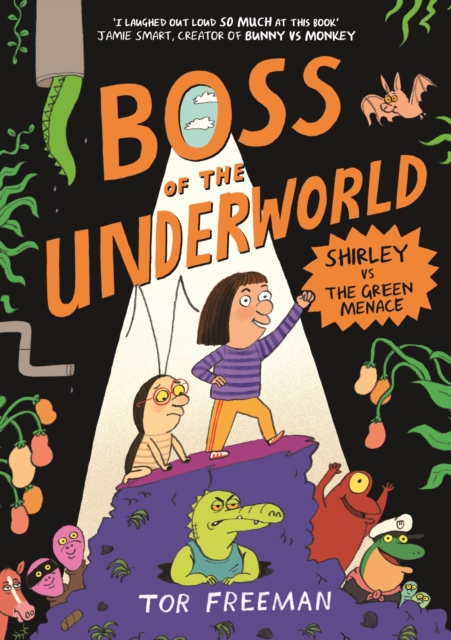
There is also levity when approaching the underworld. At least there is with Tor Freeman. You may recall us raving about Boss of the Underworld: Shirley vs The Green Menace, in which Shirley drops a pound coin down a manhole and falls down after it. There she is met by a cockroach who believes her to be the chosen one sent to rescue the creatures of the sewer from their horrid boss.
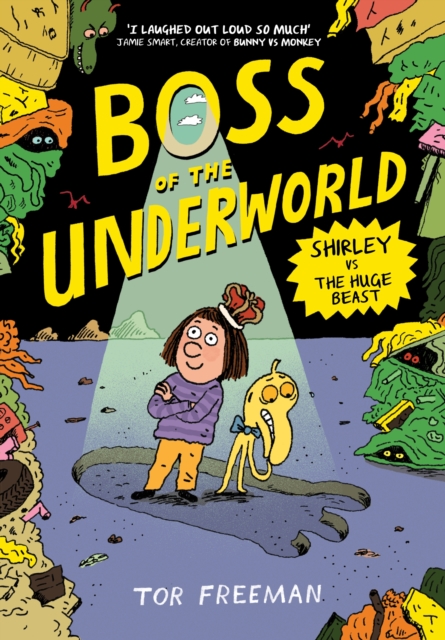
Shirley is back. Or rather, Shirley has fallen even further. Having sorted out the underworld, the under-underworld needs her attention. In Boss of the Underworld: Shirley vs the Huge Beast, she and a banana peel must make their way through a lot of rubbish, not to mention bats, sharks and ticket inspectors, to defeat a monster and restore the rightful queen.
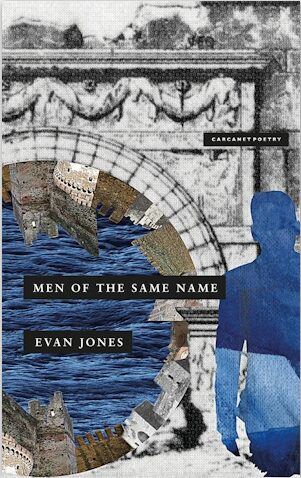
It is wild. Silly. Clever. Odyssean. I think I got most of the classical references. I will not pretend the same of Men of the Same Name by Evan Jones, a collection full of history and mythology. Yet his poems do not shut out the reader, whether you know your Presocratic philosophers and Greek tragedians and minor mythological characters or not. I think that is quite something – reading these, one wants to devote close attention and time to his writing, his characters and the poet, perhaps on that same pavement as Julian Barnes, to spot patterns in how we have lived for thousands of years, be curious, do something.
Do come and be curious in the shop tomorrow at 5pm when Erica Hesketh will be reading from her poetry collection, In The Lily Room. Please let us know if you are coming so that the ferryman can get us all safely into the underworld/basement.
May your weekend find you with a book by your side, in conversation with a favourite author,
Lizzie
Featured in the newsletter
-

The Writing Life
£9.99 -

Departure(s)
£18.99 -

The Ferryman and His Wife
£12.99 -

Boss of the Underworld: Shirley vs the Green Menace
£7.99 -

Boss of the Underworld: Shirley vs the Huge Beast
£8.99 -

Men of the Same Name
£12.99